
Record Parliamentary Sessions.
Publish the Official Record.
WhoSaidWhat records sittings in real time and transforms them into accurate, speaker-identified Hansard reports — ready for publication and long-term archiving.
Request A Consultation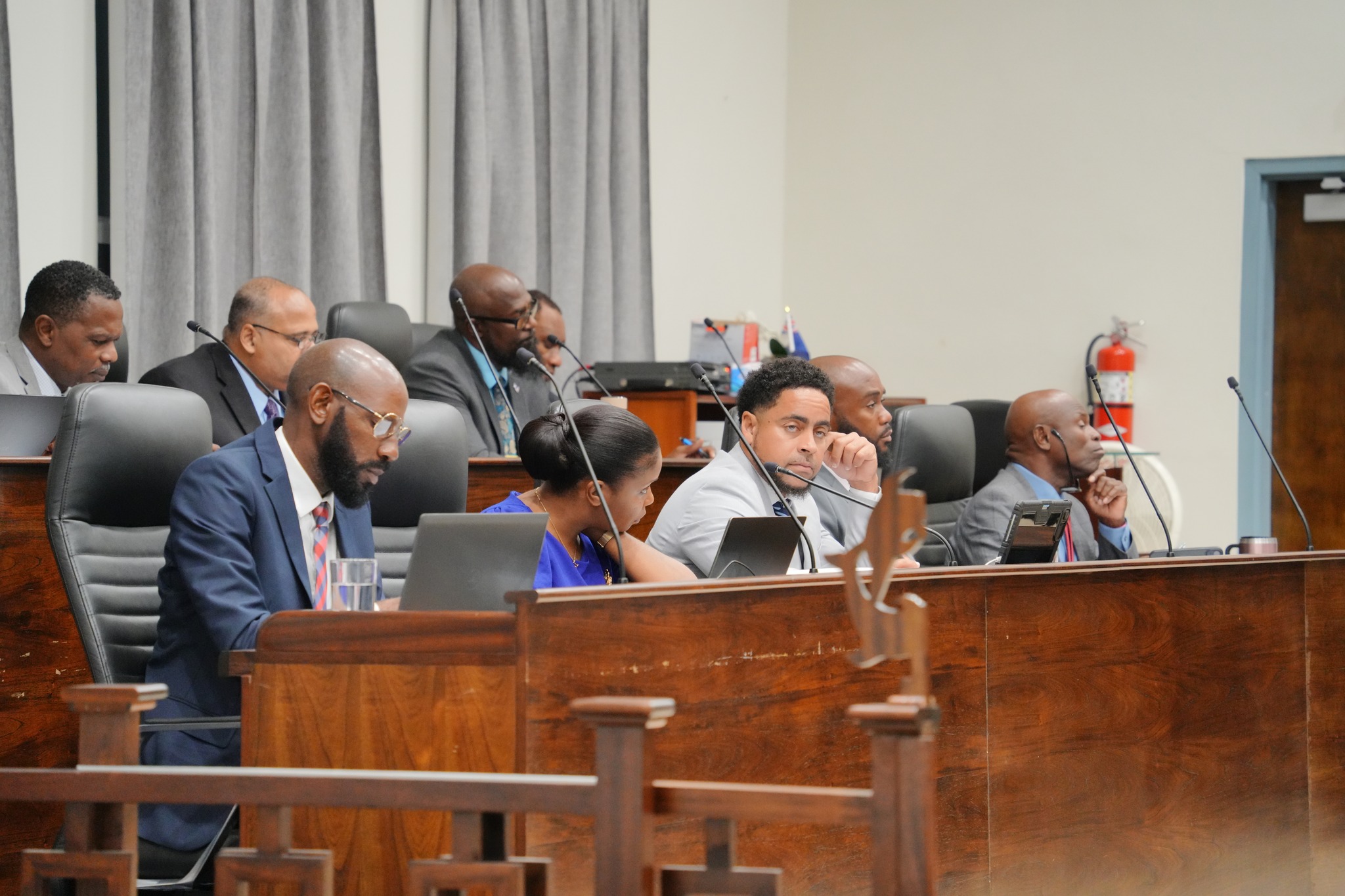
Faster Than Manual Transcription
Purpose-Built for
Parliament
WhoSaidWhat is designed specifically for Houses of Assembly — capturing proceedings as they happen and converting them into accurate, structured records that meet official reporting standards.
From live audio recording to publication-ready transcripts, every feature supports transparency, consistency, and long-term public access.
House of Assembly — Morning Sitting
Chamber Audio Feed
Madam Speaker
Order, order. The House will now proceed to Item 4 on the Order Paper.
Hon. Minister of Finance
Thank you, Madam Speaker. I rise to present the Budget Estimates for the fiscal year.
Hon. Minister of Finance
The question is that the Bill be now read a second time.
Automatically archived upon session close
Ask Chatbot — Your
AI Companion
Our built-in AI chatbot understands natural language questions and retrieves precise answers from your Hansard database in seconds. Search across sessions, get plain language explanations, and track participation — all through conversation.
Ask about topics, members, dates, or specific sittings, and get accurate, context-aware responses instantly — no need to scroll through pages of records.
And if a debate or discussion feels complex, Ask Hansard can explain it in plain language, breaking down technical or procedural jargon into clear, easy-to-understand summaries.
Whether you're a researcher, journalist, or citizen, Ask Hansard helps you grasp the meaning behind every motion, debate, and response — making public records more accessible than ever before.
Ask Hansard
Always ready to help
What topics were discussed on October 17th?
Three main topics:
- Education budget
- Healthcare infrastructure
- Environmental legislation
What does "motion to table" mean?
It means to formally present a bill to parliament for discussion — like putting a document "on the table" for everyone to debate.
How many times did MP Smith speak last month?
MP Smith contributed 12 times across 4 sittings in October. Main topics: housing policy (5), transport (4), and budget questions (3).
Show me debates about climate change
Found 8 debates on climate change this session. The most recent was Oct 12 regarding emissions targets. Want me to summarize?
Why Parliamentary Bodies
Choose Us
Our platform processes parliamentary audio 10x faster than manual transcription, with 99%+ accuracy rates and automatic speaker identification that reduces editing time by up to 80%.
For Parliamentary Staff
- ✓Reduce transcription time from days to hours with AI-powered automation
- ✓Maintain editorial control with inline editing and review workflows
- ✓Collaborate in real-time with team members across departments
- ✓Ensure accuracy with speaker verification and audio playback
For Citizens & Researchers
- ✓Access complete, searchable archives of parliamentary debates
- ✓Watch synchronized video alongside official transcripts
- ✓Ask natural language questions about past proceedings
- ✓Export records in multiple formats for analysis and reference
Built for the Whole Hansard Workflow
The platform reaches well beyond the live mic — from tracking bills as they move through each reading to opening your data to researchers and citizens through a structured public API.
Legislation Tracker
Follow bills before Parliament through every reading stage, with status changes surfaced to clerks, MPs, and citizens automatically.
Open Parliament API
Structured access to sittings, speeches, members, bills, committees, and search — for researchers, journalists, and civic technologists to build on your data.
YouTube + Time-Linked Playback
Import directly from a YouTube URL or your own recordings, then click any timestamp in the transcript to jump straight to that moment in the video.
Topic Classification & Batch Processing
AI tags every speech by topic for searchable analytics, and historical backlogs can be processed in bulk to bring decades of records online.
Frequently Asked Questions
WhoSaidWhat combines AI transcription with automatic speaker identification and a built-in review workflow, so clerks and parliamentary staff keep full editorial control before anything is published. The platform reaches very high accuracy on clear chamber audio, and the editing tools let your team correct, split, merge, and verify utterances against the original recording — so the final Hansard record meets your official standard.
Yes. The platform automatically detects and attributes speakers throughout a sitting. You can build a voice profile library so members are recognized across sittings, play audio samples to confirm attribution, and reassign or correct any speaker manually. The result is a clearly attributed record of who said what.
Yes. The platform supports an accent correction dictionary and custom terminology, so it can be tuned to your members' speech patterns, local place names, procedural language, and the specific vocabulary of your House. Accuracy improves as the system is configured to your chamber.
You can upload audio and video files directly, record live within the platform, or import straight from a YouTube URL. Every speech is time-linked, so a viewer can click a timestamp in the transcript and jump to that exact moment in the video — perfect for verifying a quote or watching how something was delivered.
Yes. Published Hansard records appear on a searchable public portal with your branding, are accessible through the Open Parliament API, and are surfaced automatically on the Open Parliament App (iOS & Android) — so citizens, journalists, and researchers can find and read your proceedings.
Not necessarily. WhoSaidWhat works with audio you already capture. Where a chamber needs streaming or recording infrastructure, Evoluut can scope and supply that separately — but the platform itself simply needs your session audio to begin producing records.
Ready to Transform Your Parliamentary Reporting?
Join legislative bodies worldwide in modernizing their Hansard documentation with AI-powered tools that maintain the accuracy and standards your institution requires.